
Formosa Cafe · West Hollywood
The Formosa closed. Its former owner kept the pieces.
Vince Jung kept photographs and decor after his family’s restaurant closed. They helped a new team bring the Formosa back.
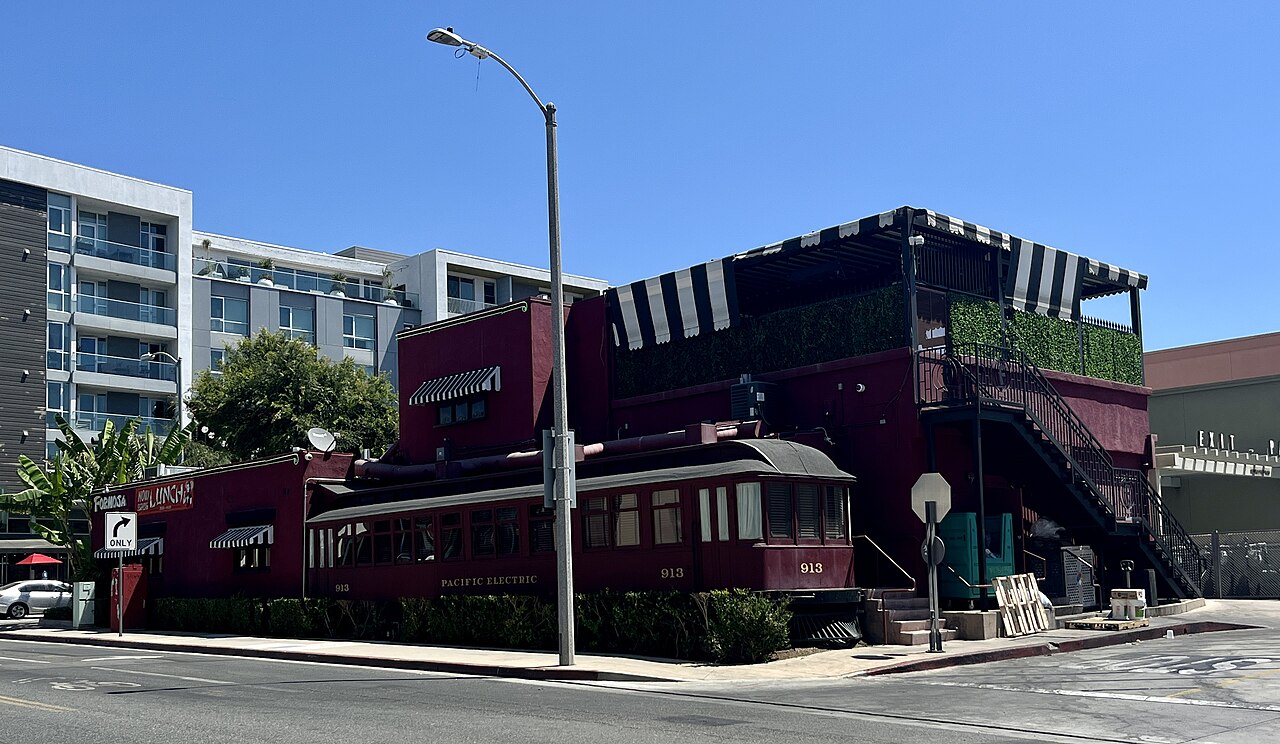
When the Formosa Cafe closed in late 2016, Vince Jung still had pieces of it: photographs, ornaments and other decorations he had kept.
His family had run the West Hollywood restaurant for decades. When a new team took it on, they needed more than a building. Jung had objects to return and years of knowledge about the place.
His grandfather had saved it once
The Formosa dates its opening to 1939, across from the Samuel Goldwyn studio. Jung’s grandfather, Hong Kong-born chef Lem Quon, became its sole owner in 1976.
In 1991, Warner Bros. wanted to replace the restaurant with parking. Quon and the Friends of the Formosa opposed the plan. The restaurant survived.
Quon’s stepson William Jung was running it when Quon died in 1993. Vince later carried on the family business. Keeping it open brought a different set of problems.
Before the closure, a fight to recover the room
In 2014, Vince tried a kitchen partnership with Red Medicine’s management. It lasted only months. Another company, BRG, later took operational and management control.
BRG changed the room in 2015. The photographs came down. Gray paint replaced the familiar red. Jung told LA Weekly the overhaul happened without his knowledge.
Customers objected. By October 2015, BRG was gone and Jung’s team was bringing the old room back. Eater reported that most of the collection’s more than 200 photographs were being repaired and returned. An original mirror would replace a mural. The team planned a Halloween party to help pay for new upholstery on the red booths.
The effort did not keep the business open. The Formosa closed in late 2016.
The pieces came back
In 2017, 1933 Group took on the restaurant. Its partners were Bobby Green, Dimitri Komarov and Dmitry Liberman. Green, a former Formosa customer, contacted Jung.
Jung contributed the objects he had kept and advised the renovation. The new team restored seating, worked on the kitchen, electrical systems and plumbing, and repaired the old streetcar built into the restaurant.
The Los Angeles Conservancy helped secure a $150,000 preservation grant for the trolley. Workers removed drywall to expose more of the car. It had been part of the building all along.
The rehabilitation took two years and cost more than $2 million. Green worked with designer Tina Charad on wallpaper drawn from earlier designs.
A familiar room, with more stories on its walls
Filmmaker Arthur Dong curated Hollywood Chinese at the Formosa, with exhibition design by Max Shapovalov. Photographs and film material brought Chinese and Asian American screen history into the restored restaurant.
The Formosa reopened in June 2019. Its return involved Jung’s saved objects and advice, 1933 Group’s investment, and the work of craftspeople and curators. The pictures were back on the walls, and the restaurant was serving again.
Find the Formosa
The restaurant is at 7156 Santa Monica Boulevard in West Hollywood. It serves Chinese-American food under executive chef Dan Huerta and remains in 1933 Group’s portfolio, as checked on October 24, 2026. Use its official website for current menus, hours and reservations.
How we reported this · 33 sources
- The venue's website: theformosacafe.com
- The venue's website: theformosacafe.com
- The venue's website: theformosacafe.com
- The venue's website: theformosacafe.com
- The venue's website: theformosacafe.com
- The venue's website: theformosacafe.com
- The venue's website: 1933group.com
- Press coverage: pbssocal.org
- Press coverage: laist.com
- Press coverage: laist.com
- Press coverage: laconservancy.org
- Press coverage: yahoo.com
- Press coverage: foodrepublic.com
- Press coverage: lamag.com
- Press coverage: lamag.com
- Press coverage: discoverlosangeles.com
- Press coverage: tastingtable.com
- Press coverage: timeout.com
- Press coverage: route66news.com
- Press coverage: hollywoodauthentic.com
- Press coverage: avoidingregret.com
- Press coverage: en.wikipedia.org
- Press coverage: laweekly.com
- Press coverage: vietworldkitchen.com
- Press coverage: lamag.com
- Press coverage: savingplaces.org
- Press coverage: latimes.com
- Press coverage: laweekly.com
- Press coverage: la.eater.com
- Press coverage: laist.com
- Press coverage: blog.resy.com
- Press coverage: deepfocusproductions.com
- The venue's website: theformosacafe.com
Pull a thread
Where this story goes next
Bobby Green once went to punk shows at Mr. T’s Bowl without noticing the lanes. Years later, his team helped bring them back.
Highland Park Bowl · Highland Park, Los Angeles
The bowling alley was behind a curtain.
Bobby Green once went to punk shows at Mr. T’s Bowl without noticing the lanes. Years later, his team helped bring them back.
Read the storyBen Lovett spent six years turning a Los Angeles warehouse into Pacific Electric. Some of the most revealing details are behind the stage.
Pacific Electric · Chinatown, Los Angeles
A musician built the backstage he wished he’d found on tour.
Ben Lovett spent six years turning a Los Angeles warehouse into Pacific Electric. Some of the most revealing details are behind the stage.
Read the storyOrder a chili size and you get the burger without the bun. A waiter's shout named it.
Dish
Chili size
Not quite a burger
Jack Smith described Ptomaine Tommy DeForest's size as a hamburger covered with chili and beans and sprinkled with chopped onions called violets or flowers. The bread came on the side, which, the Times noted, is what set it apart from a chili burger. As for the name, Smith said DeForest offered hamburger and steak sizes until the steak faded and the waiter simply hollered "Size!" The Homestead Museum says it came from the size of the ladle.
A quarter in 1928
By 1928 O'Dell's on South Figueroa sold a Size, a grilled hamburger smothered with chili and beans, for 25 cents, a Double Size for 35 and a Royal Size with spaghetti, chili beans and cheese for 40. In Santa Monica the Brae Mar Inn sold a Hamburger (Size) for a quarter.
At New Chinatown's first birthday in 1939, the cake was lettered "chop suey."
Place
Chinatown
The first Chinatown
The original Chinatown grew up around Alameda and Macy streets from the 1880s. It was demolished, from 1933, to make room for Union Station.
A plaza from the movies
New Chinatown opened for business in 1938. Community leader Peter Soo Hoo Sr. helped shape it, Hollywood set designers worked on it, and Cecil B. DeMille donated a prop. Its lanes were named Gin Ling Way, Bamboo Lane and Chung King Road, for Chongqing. At the first anniversary in 1939, a giant cake was served lettered "chop suey." Tyrus Wong painted a dragon mural in the plaza, restored by Fu Ding Cheng in 1984.
The neighbors
Phoenix Bakery opened the same year as the plaza and has been a Chan family business ever since; Philippe's is a neighbor on Alameda Street.
Now · Phoenix Bakery, open since the plaza's founding year, celebrated its 88th anniversary in 2026 at 969 North Broadway.
- Phoenix Bakery Baking here since the year New Chinatown opened since 1938
- Philippe the Original French dips on Alameda Street, at the neighborhood's edge today
- Pacific Electric A music room in the neighborhood today
6 more threads
Hollywood began as a town that voted to ban liquor sales. Six years later it joined Los Angeles, for the water.
Place
Hollywood
A town that voted itself dry
Harvey Wilcox filed the name Hollywood with the county recorder in 1887; his wife, Daeida, said she chose it because it sounded nice and holly brings good luck. Hollywood incorporated as its own city in November 1903, by a vote of 88 to 77. Two months later its voters banned liquor sales except for medicine, 113 to 96, so its hotels and restaurants couldn't serve so much as a glass of wine with dinner. The independence didn't last. Hollywood merged with Los Angeles in February 1910 to get a reliable water supply and the city's sewers, and most of Prospect Avenue became Hollywood Boulevard.
Older than the sign
Frank's Cafe, the restaurant that became Musso & Frank, opened on Hollywood Boulevard on September 27, 1919, less than four months before national Prohibition began; one centennial history says the boulevard was still a dirt road. The HOLLYWOODLAND sign went up in the hills in 1923 to sell a housing development, and lost its last four letters in 1949. NPR, marking Musso's centennial, noted the restaurant is older than the sign. The Walk of Fame officially opened in 1960; in 2019 Musso & Frank got a star on it (Wikipedia calls it the first restaurant to receive one).
The writers' block
In the 1930s the studios brought the country's novelists to Hollywood, and the Screen Writers Guild kept offices across the boulevard from Musso & Frank. Stanley Rose's bookshop sat next door to the restaurant, and Alta reported that its owner held literature seminars in a space that housed slot machines. The novelists, as Mark Echeverria tells it, complained at the Guild and then crossed the street to drink at Musso's.
Now · Musso & Frank is still at 6667 Hollywood Boulevard, run by the family of John Mosso, who bought into it in 1927. Its website lists dinner Tuesday to Sunday.
- Musso & Frank Grill Hollywood's oldest restaurant, on the boulevard since 1919
- The Back Room at Musso & Frank Where the studios' novelists drank 1934-1955
- Frolic Room A 1930s bar on the boulevard, next door to the Pantages
- Charles Bukowski Drank on the boulevard, at Musso's among other bars
- The Magic Castle The magicians' clubhouse in a 1909 Hollywood mansion
- Avalon Hollywood The 1927 theater on Vine that became a nightclub
- Roscoe's House of Chicken 'N Waffles Chicken and waffles on Gower
- Yamashiro The 1914 replica of a Japanese palace in the hills above
A nickel could take you as far as you cared to ride. The last Red Car ran in 1961; its ghosts are still all over LA.
Organization
The Pacific Electric Railway (the Red Cars)
Huntington's railway
Henry Huntington, nephew of the railroad baron Collis Huntington, expected to inherit the Southern Pacific. When Collis died in 1900, he was forced out with a $15 million payout instead, and built his own railway in Los Angeles, along with hundreds of subdivisions on the city's edge for it to serve. At its height it ran on about 1,100 miles of track, roughly a quarter more than New York City had in 2013, by 99% Invisible's count. Huntington sold it to the Southern Pacific in 1910, and ridership peaked in the mid-1920s.
A nickel to anywhere
Regulators barred the company from charging by distance, so, as Nathan Marsak tells it, a five-cent fare took you as far as you wanted to go. As cars multiplied, the Red Cars fell into disrepair and riders mocked them as a "slum on wheels." In 1926 voters turned down the Southern Pacific's plan for publicly funded subways and elevated trains.
Where the ghosts are
The Red Cars' last route, Los Angeles to Long Beach, got rail again in 1990 as Metro's Blue Line, along much of the same route. Today's A Line follows the old Long Beach Line for much of its southern stretch and stops at Chinatown station. Over the LA River, a footbridge finished in 2020 stands on old Red Car pylons. In West Hollywood, the Formosa Cafe is set in Red Car No. 913.
Now · Pacific Electric is also the name of a 750-capacity music room at 1729 Naud St., near Chinatown, opened in March 2026 and named for the railway. Its site tells visitors to take the Metro A Line to Chinatown station.
- Who killed the Red Cars? The argument over why it ended 1949 to now
- Pacific Electric A music room named for it since 2026
- Naud Junction An older rail junction on the street where the music room stands 1880s-1930s
- Chinatown The A Line, partly on the old Red Car route, stops at Chinatown station today
A pier bartender, a think tank landlord and a park that wanted a bar's spot: Santa Monica's nights run through one block of Ocean Avenue.
Place
Santa Monica
From the pier to Ocean Avenue
In the 1950s Jay Fiondella was an actor hustling for small parts and tending bar at Sinbad's, on the Santa Monica Pier. He ate breakfast at a struggling coffee shop up on Ocean Avenue, the Dawn Cafe, and in 1959 he took it over and made it Chez Jay. It sits at 1657 Ocean Avenue, in a building the Santa Monica Conservancy dates to 1947. Its portholes, the Santa Monica Conservancy says, came from a pre-war gambling ship seized in Santa Monica Bay.
The think tank landlord
Santa Monica was also home to the RAND Corporation, and the Los Angeles Times reported that the think tank was Chez Jay's landlord. Henry Kissinger conferred with RAND researchers in the back so often that a rear table was nicknamed the Kissinger Room. Daniel Ellsberg worked at RAND too, which is how the city's best bar rumor was born: that he passed the Pentagon Papers to a reporter at Table 10. Nobody has proved it.
The park next door
In 1999 the city's redevelopment agency bought Chez Jay and the land around it for a new civic center park. State lawmakers and courts abolished redevelopment agencies in February 2012, which left the land with a successor agency and the bar's future unclear. The city's park plan wanted a casual restaurant that opened onto it. Regulars got Chez Jay landmarked in October 2012 instead, and Tongva Park opened beside it in 2013.
Now · Chez Jay is open on Ocean Avenue, and its outdoor sister, The Backyard at Chez Jay, sits beside Tongva Park with fire pits and live music on Wednesday nights, by the restaurant's 2026 site.
- Chez Jay The peanut bar half a block from the pier since 1959
- Harvelle's Another Santa Monica night out in our stories
Swingers cost $250,000, and more of that went to music rights than to making the movie.
Work
Swingers (1996)
Written in ten days, shot on leftovers
Jon Favreau told Grantland in 2014 that he started the script as an exercise after a breakup and wrote it in about a week and a half, roughly 10 pages a day. Doug Liman told Grantland he raised $200,000 from a business associate of his father's on the condition that he direct; Wikipedia lists the budget at $250,000. Per Wikipedia, much of it was shot on short ends, so many scenes ran about 60 seconds a take, and more money went to music licensing than to the film itself.
Real rooms, real customers
Liman's rule, as he told Grantland, was to shoot in a bar while it's open to the public, because it comes with all the extras. The Dresden in Los Feliz, a bar Wikipedia says Vince Vaughn frequently visited, plays itself. The Derby finale was shot while the club was open, with people paying admission on the floor, per the band's Scotty Morris. Mike's apartment was Favreau's own, in Franklin Village. Film Oblivion reports that the scene set behind the Dresden was really shot in Musso & Frank Grill's parking lot, dressed with Dresden signs. The Vegas footage, about 15 minutes of the film, was shot in one night, with, per Wikipedia, exteriors at the Stardust and interiors at the Fremont.
So money
Ron Livingston told Grantland that Favreau took "You're so money" from the Spike Lee and Michael Jordan commercials, in which Lee calls Jordan money. Wikipedia notes that "money" became general slang for approval after the film, and "Vegas, baby!" stuck to the city.
A slow fuse
Miramax bought the film, for $5 million (Liman recalls $5.5 million in Wikipedia's account). It premiered at the Vista Theatre in Los Feliz; Wikipedia lists a $4.6 million gross. Favreau told Grantland it was not a hit by any stretch; home video and an MTV award for Liman made it a cult film, and it launched Favreau, Vaughn, Heather Graham and Ron Livingston. In 2008 Los Angeles Times writers and editors voted it the 14th best film set in LA of the previous 25 years.
Now · The film turns 30 on October 18, 2026. Of its LA rooms, the Dresden and Musso & Frank are open and the Vista is screening again; the Derby closed in 2009 and the coffee shop in the pandemic years.
- The Derby Where the swing-dancing finale was shot 1996
- The Dresden Mike gets the number here 1996
- Musso & Frank Grill Its parking lot stood in for the back of the Dresden, per Film Oblivion 1996
- Los Feliz Two of its bars are here 1996
Before it was a swing club, the Derby was a gas station, a drive-in and a Brown Derby. Now it's a bank.
Venue
The Derby
Gas station, drive-in, Brown Derby, swing club
The building at 4500 Los Feliz Boulevard began as a service station in 1923, the Los Feliz Improvement Association records, became Willard's Car Café by 1930, and in the 1940s was the Los Feliz Brown Derby. Commercial Observer reported that Cecil B. DeMille owned the building at one point. It was Michael's Restaurant from the 1950s until 1993, when Louise's restaurant and the Derby nightclub took over the space.
Swingers' finale
Jon Favreau hung out at the Derby while raising money for Swingers, took swing lessons there and decided it was his ending; he taught Heather Graham some of the steps. Big Bad Voodoo Daddy played there, and the scene was shot while the club was open, with people paying admission on the floor. Trumpeter Glen Marhevka told Grantland that when the band first showed up in suits and fedoras, people stared at them like aliens.
Closed, and protected
The Derby closed in January 2009. The site was declared Los Angeles Historic-Cultural Monument No. 843 in 2006, after which, Commercial Observer reports, the owners' mixed-use plans were scrapped. They put a Chase branch in place of the nightclub, spent $2 million refurbishing the building, and sold it in 2012 for $9.25 million.
Now · The Derby is closed. As of the 2012 sale, a Chase branch occupied the former nightclub; the Los Feliz Improvement Association lists Chase and a restaurant, the Mess Hall, in the building. We have not confirmed the current tenants.
- Swingers (1996) The film that made it famous 1996
- Los Feliz On Los Feliz Boulevard 1993-2009
- The Dresden The other Los Feliz room in Swingers 1996
It's been a city only since 1984. Before that, the county border is why Sunset's nightclubs could do what LA wouldn't allow.
Place
West Hollywood
Outside the city's reach
For decades this was unincorporated county land wrapped by Los Angeles. A railroad town called Sherman fought off annexation and took the name West Hollywood in 1925 while staying under county rule. Gambling was illegal in the city of Los Angeles but legal in the county, so casinos and nightclubs multiplied along Sunset Boulevard in the 1920s, mostly out of the LAPD's reach. That is the seed of the Sunset Strip.
A city in 1984
West Hollywood incorporated on November 29, 1984, after a coalition of gay men, Russian Jewish émigrés and older renters voted for it when county rent control expired. The new council was the first in the country with a gay majority, and Valerie Terrigno was its first mayor. Today it holds about 35,757 people on 1.89 square miles.
The rooms
The city counts the Whisky a Go Go, the Roxy, the Viper Room, the Comedy Store, the Rainbow Bar and Grill, the Formosa Cafe and the Troubadour among its rooms. On Santa Monica Boulevard, a few doors from the Troubadour, Dan Tana's has served Italian food in a 1929 bungalow since 1964; Visit West Hollywood calls it a Route 66 landmark.
- Dan Tana's Italian since 1964 on Santa Monica Boulevard since 1964
- The Troubadour The Troubadour, a few doors down since 1961
- Whisky a Go Go On the Sunset Strip
- Rainbow Bar & Grill On the Sunset Strip
- The Comedy Store On the Sunset Strip
- Sunset Strip The nightlife strip the county border made possible
- Doug Weston Built the Troubadour here